


How much do granulator machines cost
Planning capital expenditures requires accurate financial benchmarks. Standalone double roller granulator machine units cost between $1,600 and $4,000+, while complete automated production lines range from $100,000 to $250,000.
Dry extrusion technology operates at room temperature without added moisture. Eliminating energy-intensive heating and drying phases cuts your power usage by 30% to 50% compared to traditional wet granulation processes.
Plant managers, agricultural engineers, and fertilizer production executives can leverage these core financial advantages to optimize plant budgets and maximize operational returns.
Key Takeaways
Standalone granulators cost between $1,600 and $4,000, while full automated lines cost $100,000 to $250,000.
Dry extrusion operates at room temperature and cuts your power usage by up to 50 percent.
High-chromium alloy rollers last three times longer than standard rollers to reduce your repair downtime.
Plan your target production capacity early to avoid expensive equipment replacements later.
Double Roller Granulator Machine Price Tiers
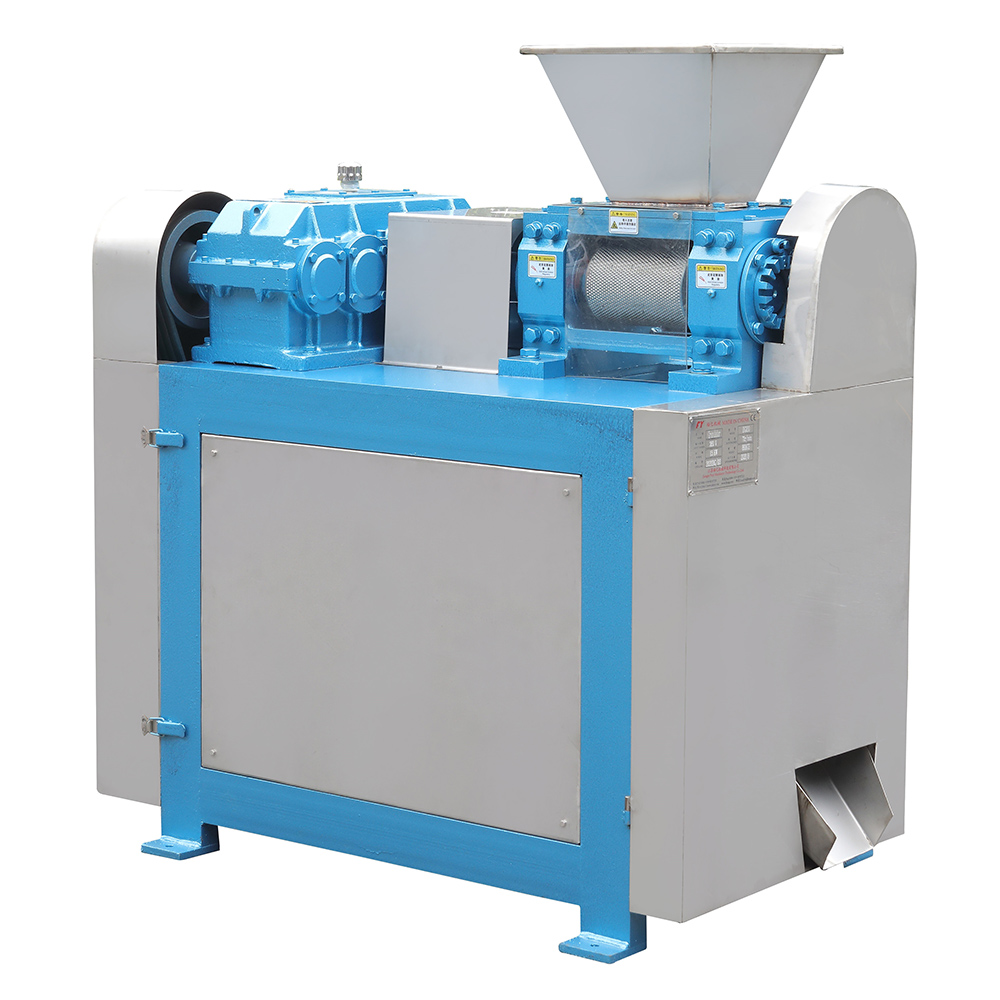
Your capital expenditure directly reflects your planned output and automation goals. Equipment manufacturers price machinery based on structural strength, roller dimensions, and total processing capacity. Understanding these price tiers helps you allocate your capital effectively while building a dependable fertilizer production plant.
Standalone Units and Pilot Granulators
Pilot units and standalone crushers offer an affordable entry point for small facilities or testing laboratories. You can purchase a basic double roller granulator machine for small-scale pilot testing starting around $1,600. These compact units handle modest feed rates around 1 ton per hour (TPH) and allow you to test specific raw material blends. Heavy-duty standalone units featuring stronger frames and upgraded alloy rollers cost $4,000 or more.
Commercial operations often rely on proven machinery like the DG Series Double Roller Granulator from Jiangsu Fuyi Machinery Technology Co., Ltd. Models like the DG-200 and DG-300 provide industrial-grade durability for continuous work. You can deploy these units as core compaction machines within custom plant setups. They process moist powder inputs smoothly, giving you consistent particle strength without adding heat.
Full Double Roller Extrusion Production Lines
Complete continuous automated production lines require a larger upfront investment, usually ranging from $100,000 to $250,000. These comprehensive systems include batching hoppers, crushers, continuous mixers, screening equipment, and automated packaging bays. Jiangsu Fuyi Machinery Technology Co., Ltd. designs these full production systems to support outputs from 30,000 to 500,000 tons per annum (TPA).
Budgeting Insight: Scaling up your production line alters your capital requirements significantly. You cannot simply retrofit a 1 TPH line to reach 5 or 10 TPH later. Small drum sizes, narrow conveyers, and limited hopper capacity create immediate bottlenecks. You must plan your target capacity from day one to avoid expensive hardware replacements.
As you scale output, your equipment requirements shift from simple manual feeding to heavy-duty automated processing. The table below outlines how target production capacity drives total capital expenses across different facility scales:
Scale / Component | Estimated Equipment CAPEX | Key Requirements & Operational Impact |
|---|---|---|
1 TPH Line | Baseline CAPEX ($1,600 - $4,000 for core unit) | Requires manual or low-capacity material handling; equipment cannot directly expand to higher processing rates. |
5 TPH Line | $255,000 (Equipment) / $320,000–$520,000 (Total Project) | Shifts operation to continuous automated processing with larger compaction rollers and continuous feed systems. |
10 TPH Line | $465,000 (Equipment) / $780,000 (Total Project) | Requires full-scale industrial continuous automated infrastructure and high-speed packaging bays. |
Dust Collection System (5+ TPH) | Additional $30,000–$50,000 | Adds mandatory wet scrubbing or baghouse systems to comply with environmental emission standards. |
Extended Batching (8-Hopper) | Additional $25,000–$35,000 | Enables precise multi-ingredient NPK formulation feeding to eliminate manual dosing steps. |
Investing in a high-capacity double roller granulator machine within an automated line lowers your labor cost per ton. Higher initial CapEx delivers lower operational costs over time through steady throughput and uniform granule creation. Choosing the right double roller granulator machine size early saves you from costly retrofitting when your business expands.
Key Cost Drivers for Granulator Equipment
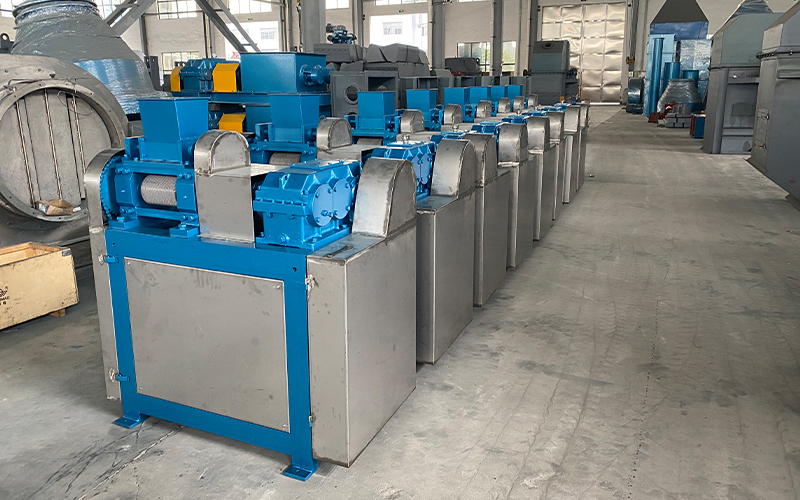
Understanding initial machinery costs requires analyzing key mechanical components. Small variations in material selection, roller engineering, and control automation drastically change both upfront purchase prices and ongoing facility expenses.
Double Roller Granulator Machine Material Build
Raw material characteristics drive the structural design of your double roller granulator machine. Abrasive and corrosive feedstocks require reinforced frames and high-grade stainless steel housings. For example, processing dense compounds like ammonium sulfate, potassium chloride, and humic acid demands heavier motor power ratings and heavy-duty gearboxes. Light organic materials like cat litter or chemical feed additives need precise feeding assemblies to prevent clogging.
Material Processing Note: Highly corrosive chemical inputs rapidly degrade standard carbon steel frames. Upgrading frame housing to stainless steel increases initial machinery investment by 15% to 25%, but it protects your equipment against structural rust and premature fatigue.
Equipment engineers calculate structural stress based on feed density and hardness. Dense inorganic powders require higher compaction forces, so manufacturers install larger motors and heavy-duty bearings. These structural upgrades increase upfront machine prices while ensuring long-term operational stability.
Roller Shell Alloys and Surface Treatments
Roller shells experience extreme mechanical pressure during continuous dry extrusion. Standard alloy steel rollers offer a lower initial unit price, but high-chromium wear-resistant alloy roller shells deliver superior durability over long production runs. Selecting high-chromium alloys reduces frequent roller swaps and protects your bottom line against unexpected factory shutdowns.
The table below compares standard alloy steel rollers against high-chromium alloy options:
Cost Metrics | Standard Alloy Steel Rollers | High-Chromium Alloy Roller Shells |
|---|---|---|
Initial Unit Price | Lower | Slightly higher |
Operational Lifespan | 500 hours (~7 replacements/year) | 1,500 hours (~2-3 replacements/year) |
Accessory Expenses | Baseline | Reduced by > 60% |
Labor Expenses | Baseline | Reduced by > 60% |
Downtime Losses | Baseline | Reduced by > 60% |
Overall Operating Cost | Significantly higher long-term | Substantially lower overall cost |
Customized roller surfaces also influence initial tooling costs. You can order customized roller patterns to produce specific granule shapes, such as oblate, irregular, strip, or slice forms. Standard oblate molds carry baseline factory costs. Complex irregular patterns or custom tablet dimensions require specialized CNC milling and precision heat treating, adding extra tooling fees to your initial quote.
Automation Level and Control Systems
Automation directly impacts equipment pricing and daily production efficiency. Manual controls utilize simple electro-mechanical switches, keeping initial capital expenditure low. Fully automated production setups feature programmable logic controllers (PLCs), touch-screen human-machine interfaces (HMIs), and continuous feed sensors.
Advanced PLC systems monitor roller gap distances, motor load currents, and extrusion pressure in real time. Automatic sensor adjustments prevent motor overloads and maintain consistent granule density. Adding smart control panels increases purchase costs by 10% to 20%, yet automated monitoring reduces manual labor requirements and minimizes material waste across your operations.
Additional Costs and Operational Expenses
Purchasing your equipment represents only part of your total capital investment. You must account for delivery, ongoing component wear, and routine site maintenance when planning your production budget.
Freight, Import Tariffs, and Installation
Shipping heavy industrial machinery across ocean trade routes adds significant costs to your invoice. Overseas freight charges depend on crate dimensions, total weight, and global shipping rates. You will also pay customs import tariffs, harbor fees, and local port clearance charges upon arrival.
Budgeting Tip: Always allocate 10% to 15% above your base machinery price to cover international shipping, port clearance, and local flatbed transport.
Factory assembly requires skilled technical support. You need electrical engineers and mechanical technicians to position equipment, align conveyors, and connect power grids. Expect installation and team commissioning services to add another 5% to 10% to your initial outlay.
Wear Parts and Roller Shell Replacement
Continuous compaction causes natural physical wear on key mechanical parts. High-pressure processing gradually degrades roller surface patterns, internal bearings, scraper blades, and rubber seals. You must store spare parts on-site to avoid sudden production halts.
Roller Shells: Require replacement after processing heavy abrasive inputs for several hundred hours.
Bearings and Seals: Need regular inspections to prevent shaft misalignments and grease leaks.
Scraper Blades: Suffer daily abrasion and require cheap, periodic swaps.
Planning fixed annual reserves for replacement components keeps your production line running smoothly without unexpected operational stops.
Power Consumption and Routine Maintenance
Dry extrusion equipment lowers your utility bills significantly because the process eliminates thermal drying equipment. You only pay for electrical power driving main gearboxes, feeding screws, and screening belts.
Routine maintenance requires simple daily tasks. Your operators must grease main bearing housings, check drive belt tensions, and clean residual powder from feeding hoppers. Simple daily care extends machinery service life and protects your long-term capital investment.
ROI and Cost Optimization Strategies
Calculating your return on investment requires evaluating daily energy savings, material efficiency, and long-term service agreements. A double roller granulator machine delivers strong financial returns by streamlining your entire processing line.
Energy Savings of Room-Temperature Extrusion
Room-temperature dry extrusion eliminates expensive industrial dryers. You can process inorganic raw materials with 2% to 5% moisture content directly. Organic feedstocks require only 6% to 12% moisture.
Energy Efficiency Tip: Bypassing thermal drying steps cuts your heating fuel expenses by up to two-thirds. You drastically lower utility bills and shorten your target ROI payback period.
Yield Rates and Material Recirculation Efficiency
High single-pass yield rates drive operational efficiency. The DG Series granulators achieve a 60% to 90% single-pass formation rate. This efficiency minimizes the volume of off-spec material returning to crushers and screeners.
Fewer recirculation passes reduce mechanical stress across your processing equipment. You save significant electrical power, lower wear on conveyor belts, and trim operational costs per ton of finished fertilizer.
Evaluating Long-Term Maintenance and After-Sales Support
Evaluating total cost of ownership (TCO) involves balancing initial equipment prices against operational lifespans and vendor support. Comprehensive service packages protect your facility against unexpected financial losses.
Cost Element | Upfront Financial Impact | Impact on TCO & Purchasing |
|---|---|---|
Installation, Training & Warranty | 5% to 15% of machine price | Included in initial capital expenditure |
Standard Warranty Duration | 1 to 3 years | Lowers unexpected maintenance costs during early operation |
Investing in strong vendor support packages provides several core operational benefits:
Risk Reduction: Accessible local technicians minimize operational hazards during complex plant setups.
Uptime Improvement: Prompt technical assistance ensures continuous equipment operation and reduces costly downtime.
Investment Protection: Reliable factory support lowers overall life cycle costs and safeguards your long-term capital investment.
Choosing durable machinery with strong factory backing optimizes your capital expenditure and maximizes plant profitability.
Purchasing a double roller granulator machine balances your initial capital investment with massive long-term operational savings. By choosing room-temperature dry extrusion, you eliminate expensive industrial dryers and cut heating energy costs significantly compared to traditional wet granulation systems.
Action Plan: Evaluate your specific raw material moisture levels and annual output targets today. Select heavy-duty roller alloys and production line capacities that match your unique operational goals to maximize your return on investment.
FAQ
What raw material moisture level works best for dry extrusion?
Dry extrusion processes require low moisture levels. Inorganic materials need 2% to 5% moisture, while organic feedstocks require 6% to 12% moisture. Bypassing extra liquids allows you to skip expensive drying equipment entirely.
Quick Tip: Always monitor feed moisture to maintain optimal granule density.
How much energy can you save with room-temperature granulation?
Room-temperature extrusion completely eliminates thermal drying. You save up to two-thirds of thermal energy compared to wet granulation methods. This massive energy reduction directly lowers your utility bills and overall operating expenses.
What single-pass yield rate can you expect from a double roller granulator machine?
An industrial double roller granulator machine achieves a single-pass formation rate between 60% and 90%. High yield rates minimize material recirculation, reduce equipment wear, and significantly boost your daily factory output.
How often must you replace roller shells?
| Roller Material | Average Lifespan | Replacement Frequency | | : | : | : | | Standard Alloy Steel | ~500 hours | ~7 times / year | | High-Chromium Alloy | ~1,500 hours | ~2-3 times / year |
Choosing high-chromium alloy shells reduces your factory downtime and lowers annual labor costs.


