


What equipment is used for dry granulation
You use roller compactors and slugging presses for dry granulation. Many industries rely on double roller granulator machines to turn moist powder into strong granules. The DG Series from Jiangsu Fuyi Machinery Technology Co., Ltd. helps you produce fertilizer, compound formulas, and mineral powders with high efficiency.
Application Type | Description |
|---|---|
Fertilizer Production | Dry granulation of potassium chloride, potassium sulfate, potassium nitrate, and more. |
Compound Fertilizer Formulas | NPK, NP, PK, and other formulas needing dry processing and flexibility. |
Mineral and Chemical Powders | Selected mineral powders, industrial salts, and chemical powders after testing. |
Key Takeaways
Dry granulation uses machines like double roller granulators and slugging presses to turn powder into granules without adding moisture.
The double roller granulator is efficient, saving energy and time by operating at normal temperatures, making it ideal for moisture-sensitive materials.
Key steps in dry granulation include weighing, compaction, milling, and final blending to ensure high-quality granules.
Choosing the right equipment depends on your powder's properties, such as compressibility and moisture content, to achieve the best results.
Regular maintenance of granulation equipment is crucial for consistent performance and to avoid production issues.
Dry granulation basics
Process overview
Dry granulation lets you turn powder into granules without adding liquid. You rely on mechanical force to compact the powder, making it ideal for materials that cannot handle moisture or heat. You often use equipment like a double roller granulator or a slugging press. These machines press the powder into dense ribbons or slugs, which you then break down into granules.
You can see the main differences between dry and wet granulation in the table below:
Aspect | Wet Granulation | Dry Granulation |
|---|---|---|
Liquid Usage | Uses a liquid binder | No liquid; uses mechanical compaction |
Equipment | Mixer, spray system, dryer | Roller compactor, mill, sieve |
Production Steps | Mix, wet, dry, mill | Compact, mill, sieve |
Suitable For | Powders needing uniform granules | Heat- or moisture-sensitive powders |
Energy & Time | Longer, higher energy | Shorter, lower energy |
Product Quality | Uniform granules, improved binding | Dense granules, good flow |
Complexity & Cost | More complex, higher cost | Simpler, lower cost |
Tip: Dry granulation saves energy and time because you skip the drying step.
Key steps
You follow several steps to achieve high-quality granules:
Weighing and Blending
You measure and mix all ingredients to get a uniform powder blend.Compaction
You feed the blend into a double roller granulator or slugging press. The machine compresses the powder into ribbons or slugs.Milling
You break the compacted ribbons or slugs into smaller granules using a mill.Final Blending
You add lubricants to the granules to help with tablet compression and reduce sticking.Tablet Compression
You compress the granules into tablets if needed.
You must control several process parameters to get consistent granule size and quality. For example, roller pressure affects granule density, and milling screen size determines the final granule size. You should check particle size after milling and monitor equipment wear to keep your process stable.
Double roller granulator technology
Principle and operation
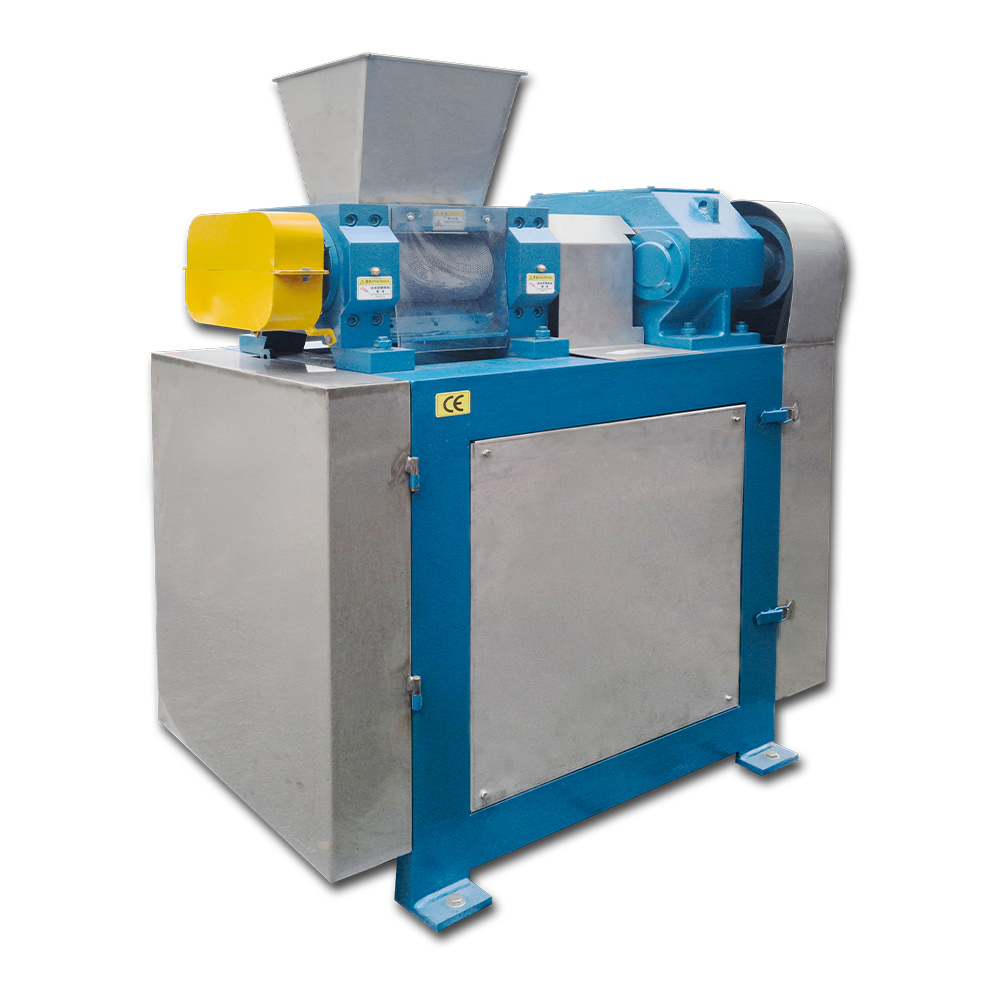
You use a double roller granulator to turn powder into strong granules. The machine works by pressing powder between two counter-rotating rollers. These rollers squeeze the powder, making it stick together and form dense flakes. You then crush these flakes to get uniform granules. The DG Series Double Roller Granulator from Jiangsu Fuyi Machinery Technology Co., Ltd. stands out because it operates at normal temperatures. This feature helps you save energy and keeps your production costs low. You can produce granules with diameters from φ4 to φ10mm, which gives you flexibility for different products. The high forming rate makes this machine ideal for large volume production.
Note: You do not need to add water or heat when you use a double roller granulator. This makes it perfect for materials that cannot handle moisture or high temperatures.
Main components
You find several important parts in a double roller granulator. Each part plays a key role in the granulation process. The table below shows the main components and their functions:
Component | Role in Granulation Process |
|---|---|
Frame Assembly | Gives strength and stability to all working parts. |
Transmission Assembly | Moves power from the motor to the granulating head and other sections. |
Granulating Head Assembly | Shapes material into granules through synchronized roller action. |
Crushing and Separation Assembly | Separates formed granules from ungranulated material, ensuring the final product meets quality standards. |
You need to check these parts regularly to keep your machine running smoothly. The rollers use high-chromium or high-manganese alloys. These materials resist wear and can handle over 1,000 metric tons under normal conditions. The service life of the rollers depends on the hardness and moisture of your raw materials.
Moisture adaptability
You can process moist powder materials with a double roller granulator. The DG Series handles powders with moisture content up to 5%. This feature helps you work with a wide range of materials. You get a high formation rate, which means you produce more granules with less waste.
The DG Series double roller granulator works well with materials that have moisture content of ≤5%.
You can use this machine in fertilizer, chemical, and feed industries.
The table below shows how different industries benefit from moisture adaptability:
Industry | Specific Needs |
|---|---|
Agricultural Sector | Uses finely ground limestone powder for soil pH adjustment and gradual calcium release. |
Environmental Treatment | Needs higher purity lime rock or quicklime with controlled reactivity for stable storage. |
Chemical Industry | Uses dolomitic limestone for magnesium and calcium content, considering hardness and abrasion. |
Tip: You can choose a double roller granulator for moist powders in many industries. The DG Series gives you reliable performance and high output.
You also find advanced features in the DG Series. The machine produces oblate particles with diameters from φ4 to φ10mm. You can use it for fertilizer, medicine, and chemicals. You get high forming rates and energy savings because the machine works at normal temperatures.
You need to replace the rollers after a certain amount of use. The frequency depends on your material’s hardness and moisture. Regular maintenance keeps your machine efficient and reduces downtime.
Other dry granulation equipment
Slugging press overview
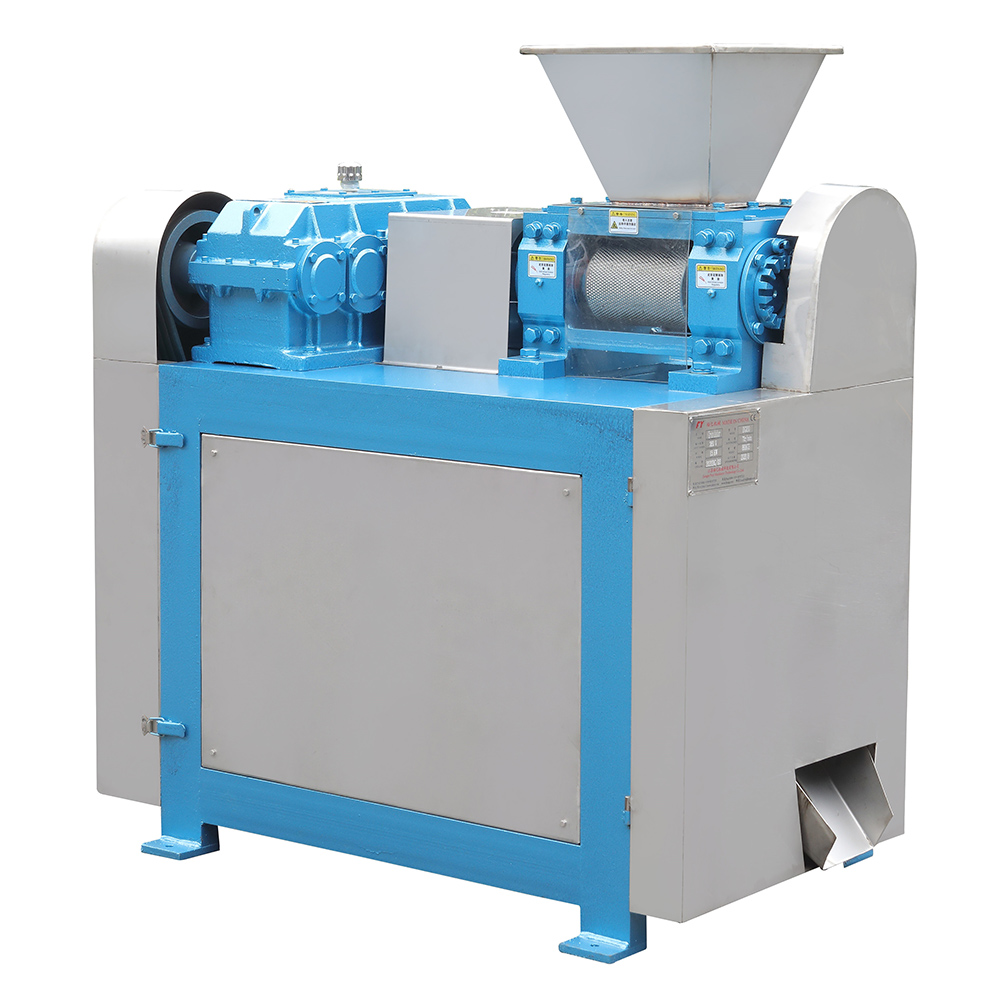
You can use a slugging press to compact powder into large, dense slugs. This machine applies high pressure to the powder, forming thick tablets or slugs. You then break these slugs into smaller granules using a milling device. Slugging presses work well for materials that do not flow easily or need extra force to stick together. You often see slugging presses in pharmaceutical labs and small-scale production. You control the pressure and speed to get the right slug size and density. Slugging is a simple method, but it can take more time than using a double roller granulator. You may choose slugging when you need flexibility or want to test new formulas.
Note: Slugging presses help you handle powders that are difficult to compact with other machines.
Blenders and mixers
You need blenders and mixers to prepare powders before granulation. These machines help you mix active ingredients and excipients to create a uniform blend. Uniformity is important because it ensures each granule contains the right amount of each ingredient. You improve product quality and dosage accuracy when you use proper blending.
You can choose from several types of blenders and mixers:
V-blender: You use this for mixing pharmaceutical powders. It creates a uniform mixture of active ingredients and excipients.
Ribbon blender: You rely on this for content uniformity during blending. It works well for large batches.
Roller compactor: You apply pressure to powders to form dense ribbons. This is preferred for large-scale production.
Oscillating granulator: You use this to mill compacted slugs into granules of the desired size.
Cone mill: You achieve uniform granule size with this milling equipment.
Blending plays a key role in dry granulation. You mix powders without adding liquids. You need precision to make sure every particle is evenly distributed. Proper blending helps you maintain flow and compressibility, which improves tablet quality and reduces defects.
Tip: You should always check the uniformity of your blend before moving to the next step. This helps you avoid problems later in the process.
Equipment comparison
Double roller granulator vs slugging press
You need to choose between a double roller granulator and a slugging press based on your production goals. Both machines help you turn powder into granules, but they work in different ways. A double roller granulator uses two rollers to compact powder at normal temperatures. You get dense flakes that you crush into granules. This method works fast and does not require heat or moisture. A slugging press forms large slugs by applying high pressure. You break these slugs into granules later. Slugging presses often suit small batches or materials that need extra force to stick together.
You can use a double roller granulator for high-volume production and materials sensitive to moisture or heat.
Pros and cons
You should look at the strengths and weaknesses of each machine before making a decision. The table below shows how double roller granulators and slugging presses compare:
Feature | Dry Granulation (Double Roller Granulators) | Slugging Press |
|---|---|---|
Advantages | No moisture or heat involved. Faster process (fewer steps). Lower operational cost (no drying). High density granules, suitable for high-dose drugs. | Produces stronger, more durable granules. Improves powder flow significantly. Enhances content uniformity for low-dose drugs. Allows for a wider range of excipients. Produces less dust. |
Disadvantages | Generates more dust. Granules are less compressible and harder. Can require specialized, expensive equipment. Not suitable for all formulations; may not provide sufficient bonding. | More complex and time-consuming process. Uses heat and moisture, which can degrade sensitive APIs. Higher energy and operational cost due to drying. Risk of over-wetting or under-wetting, which can ruin a batch. |
You get faster results and lower costs with a double roller granulator. You avoid drying steps and keep energy use low. Slugging presses give you stronger granules and better powder flow, but you spend more time and energy. You must decide which features matter most for your process.
Tip: If you want speed and efficiency, choose a double roller granulator. If you need strong granules and improved flow, a slugging press may fit your needs.
Choosing the right equipment
Material considerations
When you select dry granulation equipment, you must look at the properties of your powder. Each material acts differently during processing. Here are the most important things to check:
Powder compressibility
If your powder does not compress well, you may need to mix it with other materials that help it stick together.Moisture content
Keep the moisture level below 5%. Too much moisture can make the powder stick to the rollers and cause problems.API potency
If you work with strong active ingredients, choose equipment with a good containment system. This keeps your process safe and meets regulations.
You should also think about how your powder flows and how easy it is to compress. Granulation helps turn fine powders into larger, uniform granules. This makes the powder flow better and improves how it packs together. If your powder does not flow or compress well, you might see weak tablets or uneven blends.
Other factors matter, too:
Particle size and bulk density affect how the powder moves through the machine.
The angle of repose, cohesiveness, and abrasiveness can change how well the powder mixes and forms granules.
You need to know how your powder reacts to moisture, pressure, and temperature.
Tip: Always test your powder before choosing a machine. This helps you avoid problems later.
Production requirements
You must match your equipment to your production goals. Think about how much product you need to make and how often you will run the machine. For large batches or continuous production, a double roller granulator gives you high output and steady performance. If you work with small batches or need flexibility, a slugging press may fit your needs.
Ask yourself these questions:
How much product do you need each day?
Do you need to switch between different formulas often?
What is your budget for equipment and maintenance?
Does your industry have special rules for safety or cleanliness?
Choose equipment that fits your space, budget, and safety needs. The right choice helps you save time, reduce waste, and make high-quality granules every time.
You have several choices for dry granulation equipment. You can use a slugging press or a double roller granulator. Each machine offers unique features. You need to understand how these machines work and what makes them different. You should review your material and production needs. The DG Series gives you advanced technology and reliable results. You can achieve efficient granulation with the right equipment.
FAQ
What is dry granulation?
Dry granulation turns powder into granules without using water or heat. You use machines like double roller granulators or slugging presses. This process suits materials sensitive to moisture.
Why should you choose a double roller granulator?
You get high efficiency and energy savings. The DG Series handles moist powders and produces uniform granules. You can use it for fertilizer, chemicals, and feed.
How do you maintain a double roller granulator?
You should check the rollers and main parts regularly. Clean the machine after each batch. Replace worn rollers to keep your granulator working smoothly.
Can you use dry granulation for all powders?
You cannot use dry granulation for powders that do not compress well. Test your material first. If your powder flows poorly or needs extra binding, you may need another method.
What industries use dry granulation?
Industry | Application |
|---|---|
Fertilizer | Compound and organic |
Chemical | Industrial powders |
Pharmaceutical | Tablet production |
Feed | Animal nutrition |

