


What factors affect double roller granulator machine performance and granule quality
Five critical operational factors govern double roller granulator machine performance and output quality: mechanical pressure, roller rotation speed, feed rate consistency, raw material moisture, and binder selection. Dynamic interactions between these variables determine ultimate granule crushing strength, size distribution, and hourly production yields. High mechanical compaction combined with precise hydraulic force creates dense flakes, while uniform feeding prevents material bridging inside the charging hopper. Stable power transmission systems drive the rotating die rollers smoothly under continuous heavy shock loads. Proper moisture levels and active binder formulations establish firm particle adhesion, which reduces dust formation and eliminates operational downtime caused by roller slipping.
Key Takeaways
Hydraulic pressure controls granule density and strength.
Matching roller speed with feed rates prevents weak, brittle granules.
Correct moisture levels stop material from sticking or crumbling.
Specific binders help chemical powders form hard, durable shapes.
Mechanical Factors in Double Roller Granulator Machine Performance
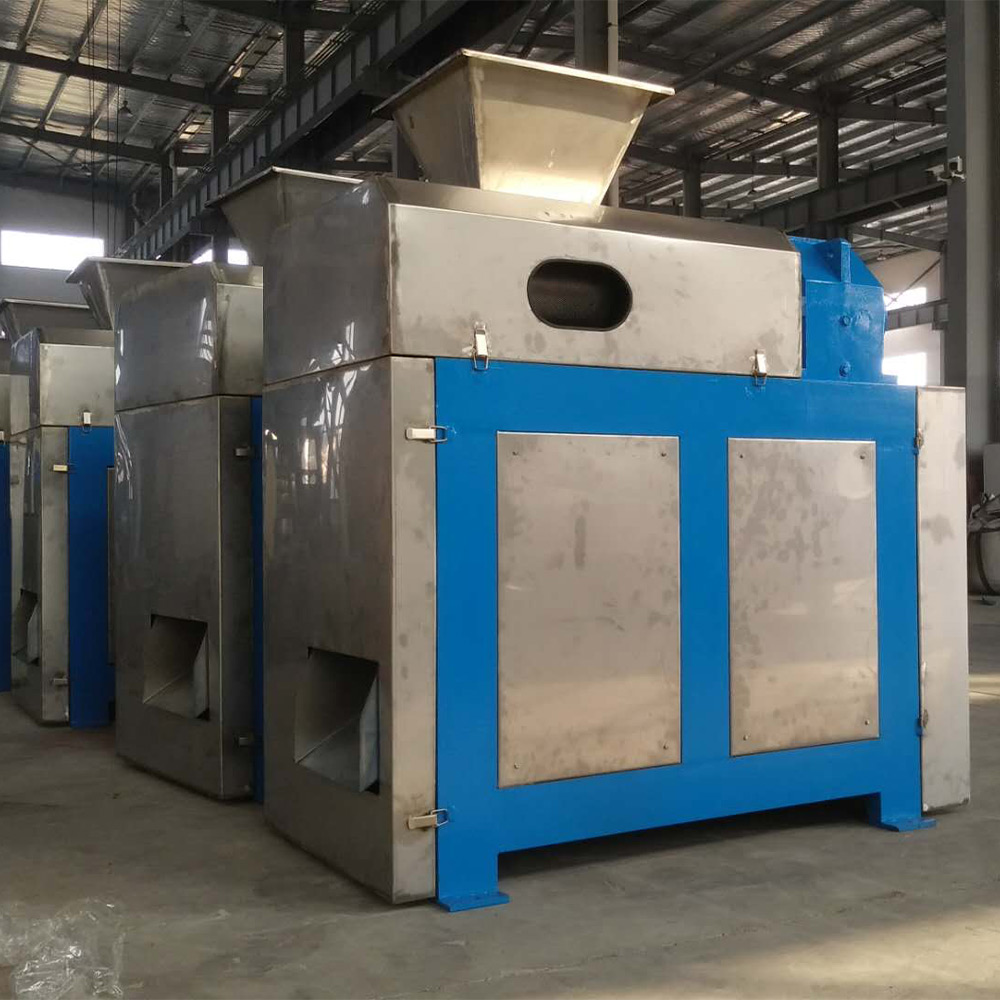
A robust drive engine and heavy transmission gearbox supply steady mechanical energy to the double roller granulator machine. Continuous counter-rotating movement demands reliable power delivery under intense shock loading conditions. Strong steel spur gears transfer uniform torque to both shafts simultaneously. This steady torque maintains consistent compaction force against incoming dry powders during non-stop factory operations. Severe power fluctuations disrupt this force balance. Unstable drive speeds cause weak compression zones, which create loose flakes and excess fine dust.
Roller Pressure and Speed Settings
Adjustable hydraulic systems control the exact force applied across the rotating roll assembly. Operators calibrate hydraulic pressure settings to press dry raw materials into solid intermediate sheets. Higher compression forces produce denser sheets with greater structural integrity. However, excess hydraulic pressure causes rapid equipment strain and premature bearing failure.
Roller rotation speed dictates the total contact time between the mechanical surfaces and raw powders. Lower rotational speeds increase powder residence time within the nip area. Extended pressing time yields stronger compacted sheets at the expense of lower hourly volume. Conversely, faster roller speeds boost machine throughput significantly. Extremely high speeds shorten pressing duration too much. The brief dwell time starves the compaction zone, producing brittle flakes that crumble during downstream screening. Operators must balance rotation speed with hydraulic pressure calibration to optimize high-density sheet output.
Feed Consistency and Pocket Surface Design
Consistent powder delivery stabilizes internal press conditions inside the double roller granulator machine. A forced feeder screw delivers uniform material volume into the nip area continuously. Steady mechanical feeding prevents common operational disruptions, such as material bridging inside the charging hopper. Consistent feed rates also stop powders from slipping between the smooth roller faces during heavy compaction cycles.
The pre-set grooves on the roller surface can be replaced as needed, extruding the material into particle shapes consistent with the grooves.
The physical surface design of the rolls directly governs initial sheet formation and final particle geometry. Special pocket molds cut into the roll shell shape the compressed powder into discrete forms as raw material passes through the high-pressure zone.
Pocket/Groove Design Feature | Influence on Material Release & Granule Shape |
|---|---|
Specific pockets or grooves on the roller surface | Directly form the material into predefined shapes as it passes through. |
Adjustable roller gap and pressure | Controls the density and final particle size of the granules. |
Customizable roller surface designs | Enables production of specific granule shapes like flat-round, pillow-shaped, or rod-shaped granules. |
Pre-set, replaceable grooves on the roller surface | Extrudes material into particle shapes consistent with the groove geometry, allowing shape changeover. |
Engineers customize these roller pocket patterns to manufacture various distinct commercial shapes, including:
Pillows and oblate spheres
Semi-circular granules and hemispherical shapes
Rods and square strips
Tablets, pills, and walnuts
Olives and flattened flakes
Proper pocket depth and smooth wall angles ensure clean material release without sticky buildup. Operators adjust the physical gap between the rollers to fine-tune final granule thickness, density, and particle size distribution. Matching feed speed with specialized pocket geometry maximizes overall operational yield.
Raw Material Properties and Granule Quality
Physical raw material properties dictate final granule morphology, crushing strength, and attrition resistance during dry compaction processing. A double roller granulator machine presses raw particles together through mechanical force without external fluid heating. Particle size, internal moisture, and binder chemistry control particle bonding mechanisms directly.
Moisture Content and Particle Size
Moisture levels inside dry feed powders act as an internal lubricant and liquid bridge during compaction. Correct moisture levels allow particles to reorient smoothly under roller pressure. Insufficient moisture creates high internal friction. The dry particles resist compaction, causing loose granules that crumble into fine dust during transport. Conversely, excessive moisture creates soft, sticky sheets. Squeezed liquid accumulates on roll surfaces, causing severe material sticking inside the roller pockets.
Target moisture thresholds depend entirely on raw material classifications:
Material Type | Optimal Moisture Content Range (for high crushing strength) | Source |
|---|---|---|
General / Not Specified | 5% – 10% | Double Roller Press Granulator (Fertilizer Production Line) |
Inorganic Powders | 2% – 5% | Jiangsu Fuyi Machinery |
Organic Materials | 6% – 12% | Jiangsu Fuyi Machinery |
Process Insight: Processing inorganic powders requires only 2% to 5% moisture. Organic materials process smoothly between 6% and 12% moisture.
Particle size distribution dictates the packing density inside roll pocket cavities. Fine particles fill void spaces between coarse grains under high pressure. Broad particle size distributions minimize internal air pockets, producing high density sheets. Excessively coarse feed reduces contact surface areas, forming weak inter-particle bonds.
Material Hardness and Binder Selection
Material hardness governs the deformation behavior of particles during mechanical compaction. Soft materials deform plastically under force, forming tight physical bonds easily. Extremely hard powders resist elastic deformation, requiring specialized binder formulations to bond individual particles firmly into durable pellets.
Material Category / Hardness Attribute | Optimal Binder Formulation | Key Supporting Rationale |
|---|---|---|
Chemical/Mineral Powders (non-sticky, lack natural adhesives) | Add 1-3% binder (e.g., bentonite, starch). | Ensures pellets form hard grains without crumbling, faster than traditional methods with zero dust. |
Soft Organic Waste (e.g., manure, lacks density) | Add hardeners like clay, zeolite, or NPK to the formula. | Boosts pellet density and structural integrity. |
Organic Materials (have natural binders like fibers/proteins) | Rely on natural binders; no added chemicals needed. | Under high pressure from the rollers, organic components form a solid bond naturally. |
General Processing for Performance | Use liquid binders: molasses for organic fertilizer; starch or polymers for industrial granules. | Improves pellet appearance, hardness, moisture resistance, and shelf life. |
Selecting proper binders improves overall granule quality significantly. Non-sticky chemical and mineral powders require targeted additives to ensure mechanical strength. Adding 1-3% binder like bentonite or starch forms durable grains rapidly without generating fine dust. Soft organic waste benefits from structural hardeners, including clay, zeolite, or NPK compounds. Raw organic feeds containing natural fibers or proteins bond naturally under heavy compression, eliminating added chemical costs. Operators apply specialized liquid binders, such as molasses or polymers, to enhance surface appearance, crushing resistance, and total product shelf life.
Optimization and Defect Prevention
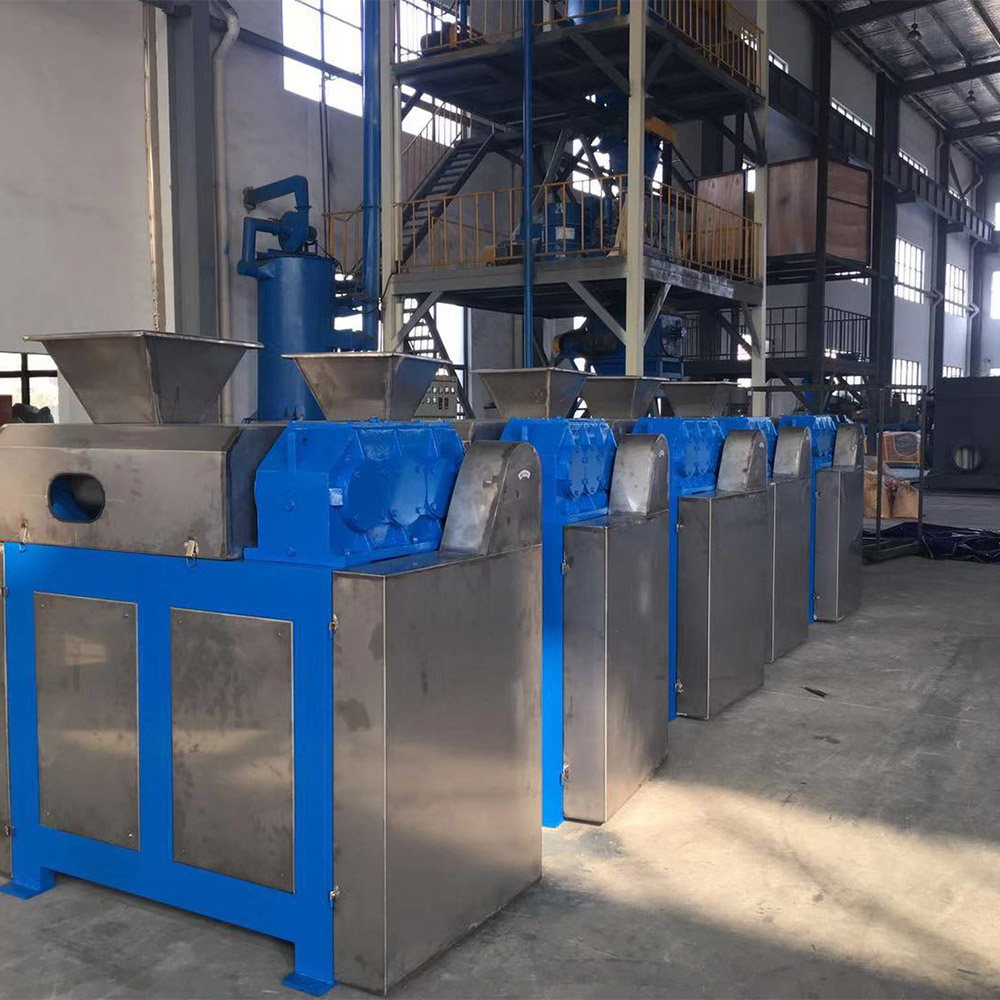
Operators optimize system settings to achieve maximum production yield. Calibration aligns mechanical force, speed, and feed supply into a balanced operation. Fine-tuning these parameters reduces waste while maintaining consistent high-density output.
System Calibration for High Yield
System calibration begins with matching the hydraulic pressure to the specific feed material. Operators adjust the hydraulic cylinders to establish steady compaction force across the roller surface. Proper gap spacing between the rolls ensures even sheet thickness during continuous operations.
Next, technicians synchronize the feeder screw speed with the roller rotation speed. A steady feeding speed maintains full roller pockets and prevents material starvation. Proper speed matching maximizes hourly throughput, minimizes power consumption, and protects mechanical drive components from unnecessary stress.
Troubleshooting Granulation Flaws
Improper mechanical settings create specific product defects during dry compaction. Operators must monitor sheet density and adjust pressure settings to prevent common physical flaws. Miscalibrated equipment directly lowers granule yield and compromises product quality.
Common Defect | Correlation with Mechanical Parameter(s) | Key Mechanism / Consequence |
|---|---|---|
Lamination | Excessive compaction force / pressure | Causes elastic recovery during decompression, leading to separation of tablet layers. |
Capping | Excessive compaction force / pressure | Leads to the formation of caps on tablets, often due to the same elastic recovery as lamination. |
Variable Tablet Hardness | Poorly controlled compaction force | Results in inconsistent physical properties of the final product. |
Generation of Fines | Non-optimized roller pressure and feed rate | Produces undesired small particles, affecting granule yield and quality. |
Excessive compaction force causes lamination when trapped air expands during pressure release. This rapid elastic expansion separates the compressed sheets into thin layers. The same excessive force leads to capping, where the top portion of a compacted shape splits apart.
Unstable pressure control creates variable tablet hardness across the same production run. Non-optimized roller pressure and feed rates cause the generation of fines. Operators fix these issues by recalibrating the double roller granulator machine hydraulic pressure and regulating raw feed consistency.
A high-performing double roller granulator machine requires precise alignment between mechanical forces and raw material traits. Plant engineers must balance steady drive power, hydraulic compaction pressure, and feed screw delivery rates against material moisture levels.
Operators can maintain peak system productivity through three routine maintenance steps:
Inspect roller pocket surfaces regularly for mechanical wear and sticky material buildup.
Maintain continuous feed delivery to avoid starvation inside the main compaction zone.
Adjust hydraulic cylinder pressure settings whenever raw material batch properties shift.
Proper process calibration maximizes overall factory earnings. Optimized compaction minimizes fine powder recycle loads, reduces mechanical stress, and reliably produces high-density granules.
FAQ
What is the optimal moisture content for double roller granulator feed materials?
Optimal moisture depends on the raw material type. Inorganic powders require 2% to 5% moisture. Organic materials process best between 6% and 12% moisture. General feed mixtures typically perform well within a 5% to 10% moisture range to prevent sticking or crumbling.
How does roller rotation speed affect granule quality?
Lower roller speeds extend powder pressing time within the compaction zone. This extended dwell time yields stronger intermediate sheets. Higher roller speeds increase hourly throughput dramatically. However, excessive speeds reduce dwell time, producing brittle flakes that crumble into fine dust during screening.
What causes lamination and capping defects during compaction?
Excessive hydraulic compaction force causes both lamination and capping defects. Trapped air inside the compacted material expands rapidly during pressure release. This sudden elastic recovery separates compressed sheets into thin layers or pops off the top portions of the formed shapes.
Why do chemical powders require added binders during dry granulation?
Chemical and mineral powders lack natural adhesives. These non-sticky materials resist physical bonding under pressure alone. Adding 1% to 3% binder, such as bentonite or starch, forms durable grains quickly. Proper binder selection eliminates fine dust generation and improves total product shelf life.


